Written by Sarah Revie (Cuvalo)
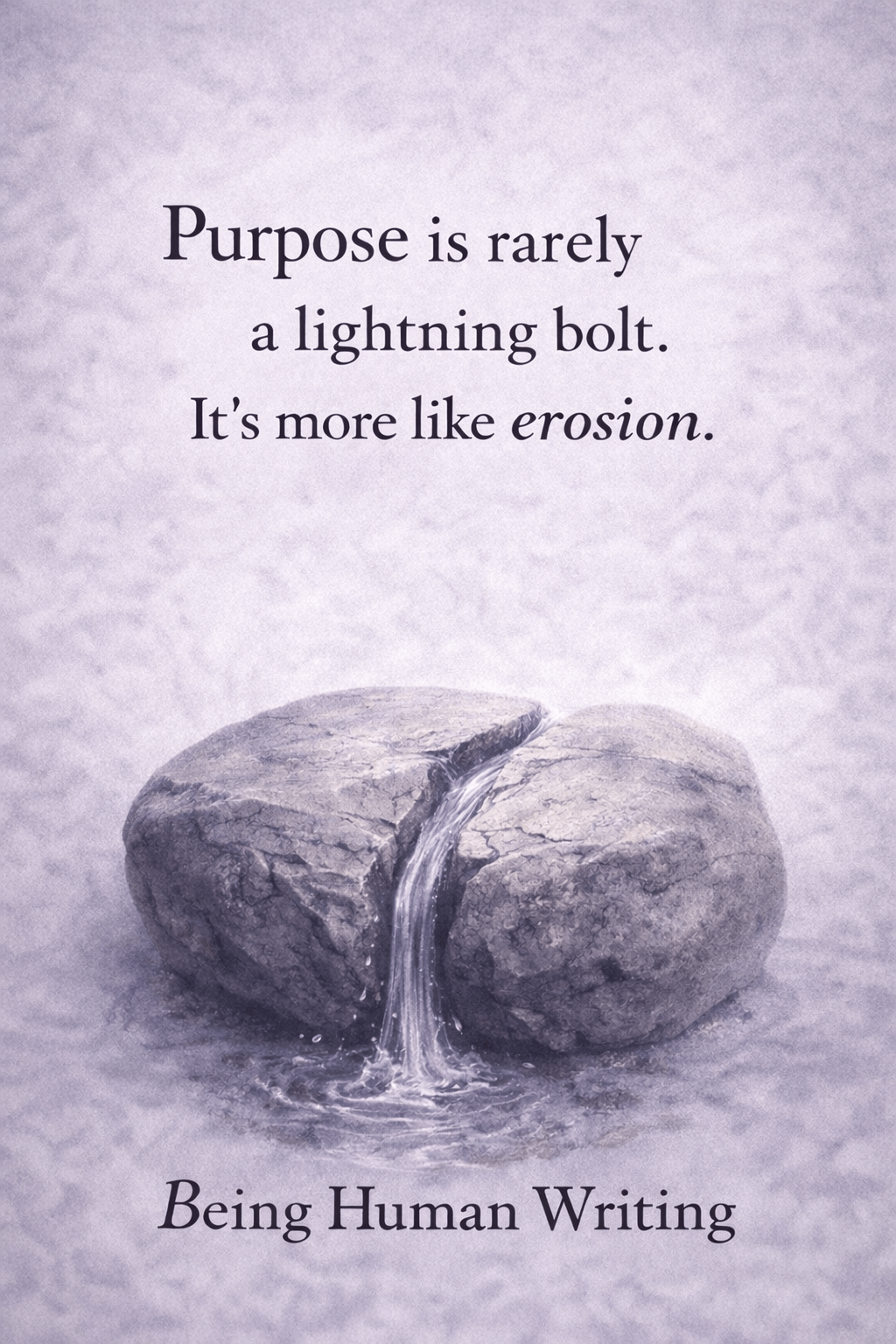
The systems don’t always hold people the way they should. And still, this work finds the people who are ready to do something different. Because purpose is rarely a lightning bolt. It’s more like erosion, slow and steady, shaping you over time until you realize the person you’ve become was carved by every story you’ve witnessed.
I didn’t wake up one morning and decide to do this work. It found me in pieces. In late-night crisis calls. In waiting rooms that smelled of antiseptic and fear. In the quiet ache of wanting to help, even when I didn’t know how. It found me in the faces of people who had been written off, and in the moments I saw myself reflected in them.
At first, I thought I was helping.
Now I know I was learning about strength, about pain, about the tender line between survival and collapse. The work changes you. Slowly. Without permission. Like water shaping a stone. It reshapes your edges, your patience, and your understanding of what it means to show up.
Some days, it feels like a choice. Other days, it feels like the work won’t let me go. I’ve seen the pain and the struggle, and I know I can’t go back.
When I started university, I thought I was going to be a lawyer. At the time, I was working in customer service, focused on school, stability, and what I thought my future would look like.
One summer, I took a student contract at a supportive living organization, mostly because I needed the money. When the contract ended, they asked me to stay. At twenty dollars an hour, I said yes. Just like that, I became an intervenor supporting adults who were deafblind and living with disabilities.
For a long time, I hated it. The work was relentless. Twelve-hour shifts in a house that never slept. There were days of pulled hair, knives, running, shouting, and public undressing. I counted down hours, not moments. I told myself this was temporary. Just a job to pay the rent.
But something shifted. Slowly, almost imperceptibly. I began to notice the people around me, not just the behaviour, but the beauty beneath it. I saw how passionate staff could make real differences. I saw connection forming in the smallest gestures: a shared joke, a gentle touch on a hand, a meal without fear.
From there, I moved into shelter work, often working overnights and sitting with people while the city slept. I listened. We talked for hours about childhoods, families, bad luck, and better dreams. We laughed and cried together. During those long nights, I learned the importance of simply holding space. I couldn’t solve their problems, but I could listen, and people would thank me just for giving them the time and space to speak.
Those late-night conversations changed everything for me. They broke me open. I began to understand the quiet power of presence, how dignity lives in being heard. I bent rules to make small things possible, switching rooms so someone could sleep in peace and stretching policy so a person could stay another night. Not to be rebellious, but to give back small pieces of what the world had taken. Choice. Autonomy. A sense of control.
The more I connected with people, the harder it became to sit with how long I had gone without understanding them. I wanted people to know they deserved connection and kindness. That was when I realized law wasn’t for me. I didn’t want to argue cases. I wanted to meet the humans written into them.
These experiences have taught me to be kinder, wiser, and braver. To question the systems that treat survival like a privilege. To fight for change, even when it felt like I was the only one fighting. Because there are people who can’t fight anymore, and someone has to keep believing they deserve better.
I was introduced to harm reduction when I began working at a supervised consumption site. That was the shift that changed everything.
Until then, substance use had always been a “no.” Every organization I’d worked in treated it as a problem to punish, not a reality to understand. At the shelter, people were kicked out for having substance-use gear, not just substances. Anyone who showed up high was labeled “unsafe” and told to go for a walk and calm down. We said it was for their safety.
But it wasn’t. It pushed people further into danger, out of sight, out of care, and out of connection.
When I began working in harm reduction, I started to listen differently, not just to stories, but to suffering. People shared experiences that broke me open. Being kicked out of shelters. Being assaulted by staff. Being called “junkie,” “addict,” “waste of space,” and being turned away from community gyms because they “looked gross.”
It was within the walls of a supervised consumption site that something opened up. People felt safer. Less judged. More connected. Part of a community. They could be honest about what they had been through without risking being turned away.
These weren’t just stories. They were evidence. Proof of what happens when systems confuse safety with exclusion. It was there, in the rooms where people used, rested, and began again, that I learned what real care looks like.
Care without preconditions. Compassion without punishment. Hope without paperwork.
Something caught fire in me. I wanted to learn more, not for my résumé, but for them. For the people who had been let down so many times, for the workers who were burning out in silence, and for the possibility that we could do better if we were brave enough to stay soft.
Because of what I’ve seen and the stories I’ve been trusted with, harm reduction is no longer an abstract concept to me. It’s not something I can step away from. It’s part of how I move through the world. It’s no longer something I carry only at work. It’s part of who I am, and every day I choose to embody it by meeting people where they are and staying soft with myself, my clients, and my peers.
Helping no longer means solving the problem. It means holding space for pain, for possibility, and for the parts of people the world refuses to see.
I no longer measure success by whether someone stops using. I measure it differently, by whether they show up for coffee, whether they feel safe enough to stay, and whether they laugh, even just once.
It’s not my job to fix things. My work is to keep showing up with softness, with refusal, and with faith that connection is a form of change. Because in a world that tells us to harden, staying soft is its own act of resistance.
This work has taken pieces of me. And yet, it has given me something I never expected: faith. Not in systems, but in people, and in the small acts of care that ripple further than we ever see.
I used to believe purpose was about direction, about choosing a path and following it. But the truth is, purpose isn’t always something we chase. Sometimes it’s what remains after the world has tested every part of you, and you still choose to care anyway.
Purpose isn’t always something we chase. Sometimes it’s what remains after the world has tested every part of you, and you still choose to care anyway.
It shows up in the quiet moments, when you’re sitting on a curb with someone who just needs to be heard, or when you catch yourself laughing after a long, impossible day. It shows up when you realize that hope doesn’t live in outcomes. It lives in presence.
I don’t know if I’ll ever stop questioning the systems that make this so hard. I hope I never do. But I do know that I’ll keep showing up softer, wiser, still believing that even the smallest kindness matters.
Because that’s what all of this has taught me. We don’t always choose it, but when it finds us, the only thing left to do is let it shape us, like water softening the edges of a rock into something gentler, stronger, and more whole.
 Being Human Writing
Leave a comment